Why 4.99 Never Feels Like Money: The Psychology of the Missing Cent
Look at two prices: 5.00 and 4.99. The difference is one cent. Your brain refuses to treat it that way. The first reads as "five euros". The second reads as "four euros and change". App stores, streaming services and subscription software did not land on 4.99 by accident. It is one of the most researched moves in pricing, and it keeps working even on people who know exactly how it works.
Your brain reads prices from the left
In 2005, Manoj Thomas and Vicki Morwitz published a study in the Journal of Consumer Research with a title that gives the game away: "Penny Wise and Pound Foolish: The Left-Digit Effect in Price Cognition". Across five experiments they showed that a 9-ending price feels meaningfully cheaper only when it changes the leftmost digit. $2.99 feels smaller than $3.00. $2.49 does not feel smaller than $2.50.
The reason is mechanical. You start encoding a number's size the instant you read it, left to right. By the time your eyes reach ".99", the judgment "four-something" has already been made. The seller sacrificed one cent to pull your mental anchor down a whole unit.
The missing pain
The second half of the trick is not the number, it is how you pay. In 1998, Drazen Prelec and George Loewenstein described the "pain of paying" in Marketing Science ("The Red and the Black"): parting with money produces genuine discomfort, and that discomfort is the natural brake on spending.
Anything that makes payment abstract weakens the brake. In a later MIT experiment, Prelec and Duncan Simester ("Always Leave Home Without It", Marketing Letters, 2001) auctioned real basketball tickets and found that participants told to pay by credit card bid up to 100 percent more than participants told to pay cash. Same tickets, same room, double the willingness to pay.
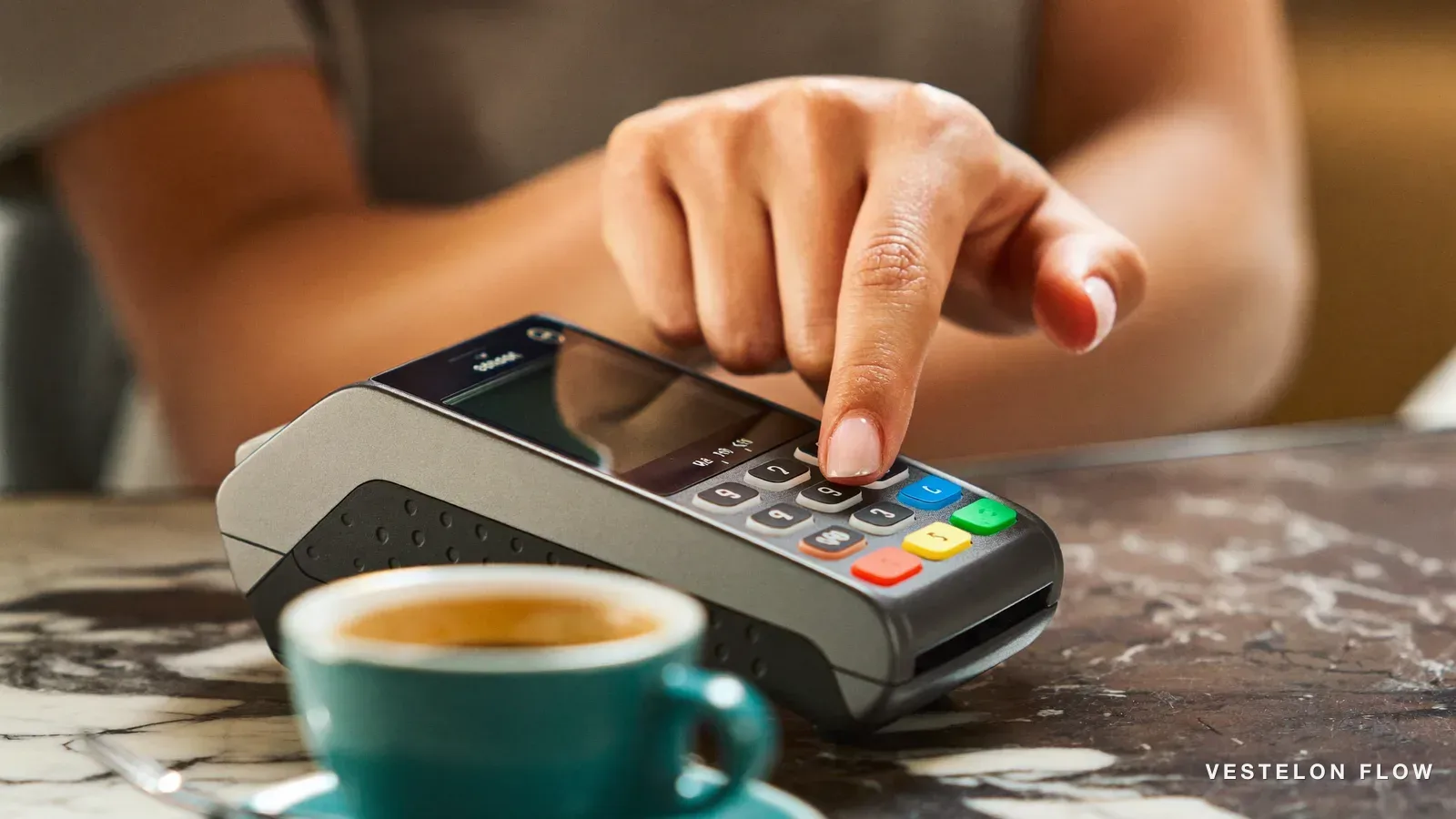
Now assemble the modern version: card stored, one tap, no cash leaving your hand, amount 4.99. Small number, invisible payment, near-zero pain. A micro-payment is engineered so the brake never engages.
Subscriptions are built to be forgotten
Charm pricing gets you in. Auto-renewal keeps you. Economists Liran Einav, Benjamin Klopack and Neale Mahoney studied subscriptions across a large payment-card network ("Selling Subscriptions", American Economic Review, 2025). Their method was elegant: when a card expires and is replaced, every subscriber is forced into an active renewal decision, and cancellations spike in exactly those months.
Their estimate: inattention and inertia roughly double sellers' subscription revenues compared with a world where people cancel as soon as they stop valuing the service. In plain terms, a large share of what subscription businesses collect exists because customers were not paying attention. And 4.99 is precisely the size of payment nobody pays attention to.
What 4.99 actually costs: a model example
This is a labeled model example, not a real customer. The math is chosen so you can check every line yourself.
- One 4.99-a-month subscription costs 59.88 a year (4.99 × 12).
- A typical stack of five costs 24.95 a month, or 299.40 a year.
- Keep that stack for ten years and you have paid 2,994 for services you may not even remember signing up for.
Now the comparison that stings. Redirect that same 24.95 a month into an investment at an illustrative ~7% a year, compounded monthly (0.07/12 ≈ 0.5833% per month, deposits at the end of each month). After 120 months the pot is about €4,318: your 2,994 in deposits plus roughly 1,324 of growth. That ~7% is purely illustrative, a rough long-run average of broad stock markets. Past performance does not guarantee future results, the value of investments can also fall, and this article is not financial advice.
The point is not that every 4.99 is wasted. Some subscriptions are excellent value. The point is that the price was designed so you would never run this calculation.
The defense: three habits, ten minutes a month
- Multiply by twelve before you say yes. Never judge "4.99 a month". Judge "59.88 a year". Annualizing restores the left digit the seller removed: fifty-nine reads like sixty, not like four.
- Reintroduce the pain once a month. Open your statement and read every recurring line. The research above says the discomfort is the brake, so let yourself feel it. What one forgotten line adds up to over the years is bigger than most people expect, we did the math in what a forgotten subscription really costs.
- Treat a replaced card as an audit. The subscription study found that cancellations cluster when a card forces an active decision. You do not have to wait for your bank: pick one day a year and re-decide every subscription as if it were new.
If you want the full list without hunting for it, there is a faster route: upload one bank statement at app.vestelonflow.com and the analysis runs directly in your browser. You see your recurring payments and your number in about a minute, with no account and no bank login, and nothing leaves your device without your consent.
Sellers know that one missing cent changes your perception of an entire price. The whole business model of 4.99 rests on you never doing the math. VESTELON FLOW exists so the math takes a minute instead of an evening. Do the math.
Upload one bank statement. FLOW shows exactly where your money leaks today, what it is worth once you redirect it, and the year it could set you free. Not another tracker: a plan you can act on.
Get my free reportFree first report · No card needed · No bank login · Delete anytime · GDPR-firstWhat you could tackle next
 Your financial data is not an advertising product
 What happens to your statement in FLOW?
 The four questions your money has never answered
 Is it safe to upload your bank statement? An honest answer
 Emotional Spending: How to Spot Your Own Triggers
 The Hidden Cost of Financial Stress