A Kids’ Birthday Party on a Budget (They’ll Prefer It)
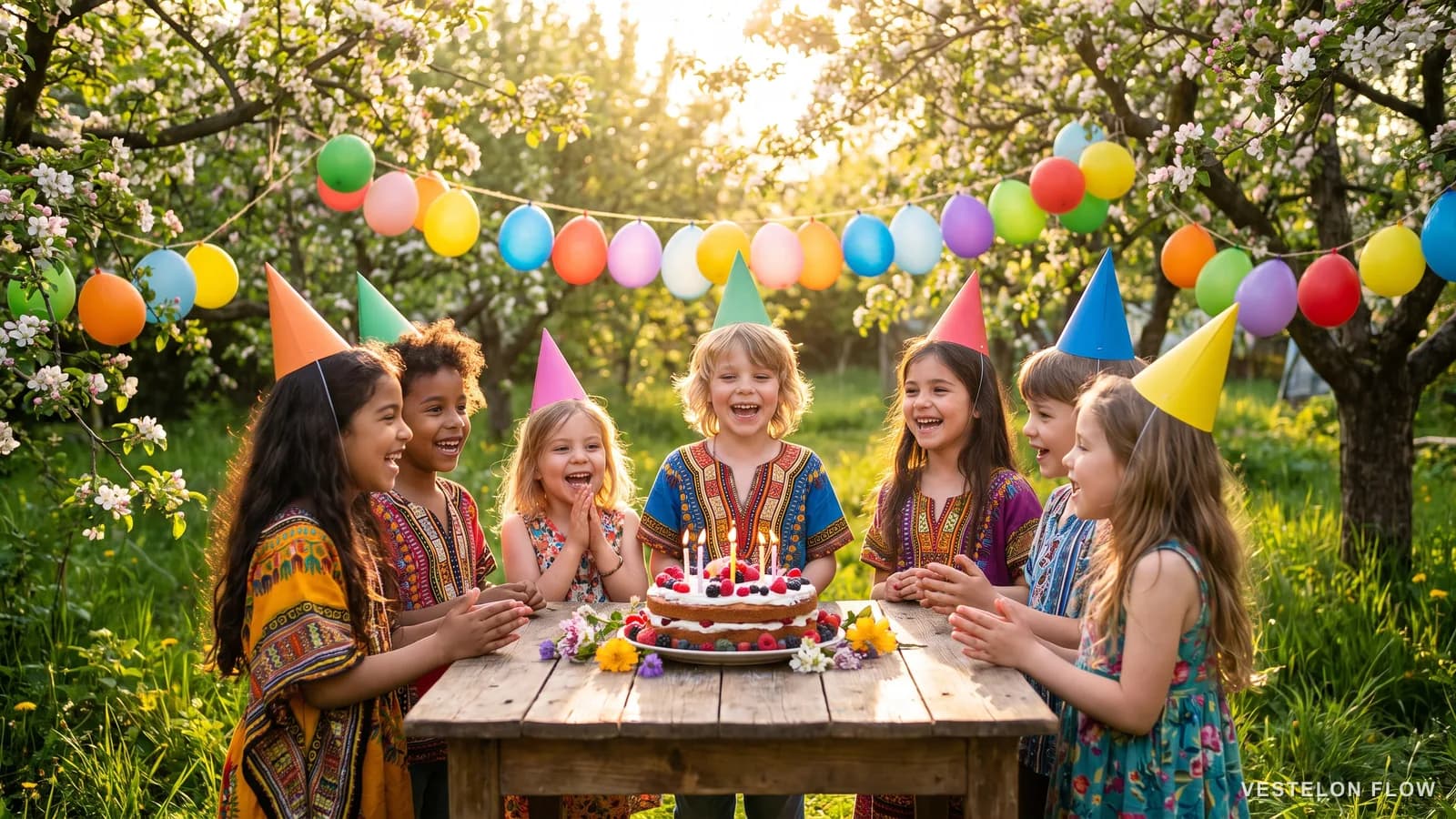
Ask a child a week after a birthday party what made it great and you will hear three things: the games, the friends, the cake. No child has ever said “the venue’s per-head pricing was excellent.” That is the whole answer up front: a party at home, in a garden or in a park, with a short guest list and three planned games, beats a commercial venue on the only scale that matters, the kids’ own, and it does so for a fraction of the cost. The rest of this article is the practical machinery: the venue math, the guest list rule, the food that actually gets eaten, and the 90 minutes of games that carry everything.
The venue math
Commercial party venues price per child, and the number adds up faster than it sounds. Soft play centres, trampoline parks, bowling alleys and laser tag arenas typically charge somewhere between €15 and €30 per child, often with a minimum headcount, a fixed two-hour slot and a food package you cannot opt out of. Twelve children at €22 is €264 before you have bought a cake, a candle or a single balloon. Add the extras most venues upsell, a party host, themed tableware, goodie bags at €5 a head, and a routine venue party lands between €300 and €450.
Now run the home version. The venue is free. A public park is free, or close to it if you reserve a pavilion. A garden costs nothing but the mowing. If you live in a small flat and the weather is against you, a community hall or scout hut usually rents for €30 to €60 for an afternoon, which is still one tenth of the venue package. The money you keep is not the point by itself; the point is that the kids do not experience the difference the way adults assume. What they experience is whether the next 90 minutes were fun, and fun is a function of planning, not of rent.
Guest list sanity: the age plus one rule
The fastest way a cheap party becomes an expensive one is whole-class inflation. The invitation list drifts from “her four actual friends” to “all 24 classmates plus siblings” because leaving anyone out feels awkward, and suddenly you are catering a small conference for people your child plays with out of politeness.
There is a well-known heuristic worth borrowing: invite the child’s age plus one. A five-year-old hosts six guests, an eight-year-old hosts nine. It is not a law, it is a direction, and the direction is correct for reasons beyond money. Small groups mean every game works, every child gets a turn, the birthday child is not overwhelmed, and one adult can actually see what is happening. Ask your child to name the friends they would be sad not to see, and you will usually get a number very close to the rule. The classmates beyond that list are better served by a box of cupcakes taken to school than by an invitation issued out of guilt.
Food that works: pizza, fruit, one showpiece cake
Children at parties barely eat. They are too excited, too busy and too aware that cake is coming. The lavish buffet, the sandwich platters, the three salads, the little quiches, exists to impress other parents and it goes largely into the bin at cleanup.
The menu that actually works has three lines. Pizza, because every child eats it and it costs little whether you order it or bake it. A big fruit platter, because grapes, watermelon and strawberries vanish at parties in a way carrot batons never will. And one showpiece cake, because the cake is the ritual centre of the entire event, the candles, the song, the photo. Spend your food effort there. A home-baked cake loaded with candy and a sparkler reads as more spectacular to a seven-year-old than a €70 fondant sculpture, and if baking is not your thing, one good bought cake plus supermarket pizza is still a fraction of any catering package. Water and one jug of juice cover the drinks. Nobody has ever left a children’s party complaining about the wine list.
Games carry the party: 90 minutes of structure
Here is the real trade secret: what you are buying from a commercial venue is not the trampolines, it is the structure. Kids melt down at parties when nothing is happening. Provide the structure yourself with three planned activities and the party runs itself.
- A treasure hunt. Thirty minutes of preparation, the biggest payoff in the business. Write six to eight clues, hide them around the flat, garden or park, and put a shared prize at the end, a box of chocolate coins splits perfectly. For pre-readers, use picture clues. Expect it to be the thing they talk about at pickup.
- An obstacle course. Cushions to hop between, a rope to walk like a tightrope, a blanket to crawl under, a spoon-and-egg finish. Time each child with your phone and let them run it twice to beat their own score. Cost: zero.
- A craft table. Decorating paper crowns, painting wooden spoons, or icing their own cupcakes. It calms the group between the loud games, and, done right, the craft doubles as the take-home gift, which matters for the goodie-bag section below.
Sequence it: 20 minutes of free play while everyone arrives, game one, food, game two, cake and candles, game three, pickup. That is roughly 90 minutes of structure inside a two-hour party, which is exactly what the €300 venue was selling you.
Decorations: balloons and one photo corner
Themed everything is where budgets quietly die: licensed plates, matching cups, character banners, a €40 pile of branded cardboard that no child looks at twice. Buy a bag of balloons and pick two colours, that is the theme.
Then build one DIY photo corner: a plain sheet or streamer curtain on a wall, a few paper props, the number of the birthday year in cardboard. It gives parents the photos they actually want, it concentrates the decorating effort where the camera points, and it costs a tenth of decorating an entire room. One corner done well beats a whole flat done thinly.
The goodie-bag trap
The standard goodie bag is €4 to €6 of plastic whistles, stickers and sugar that annoys the receiving parents and reaches the bin within a week. Multiply by twelve guests and you have spent €60 on landfill.
One nice thing beats the bag of plastic. A small book, a packet of seeds with a pot, a decent cookie cutter with a wrapped cookie, or simply the crown or cupcake the child made at the craft table. It usually costs the same or less, and it is the only version anyone remembers kindly.
The presents talk: suggest a group gift
Twelve guests means twelve €10 to €15 gifts, which is €150 of other families’ money converted mostly into clutter your child ignores by February. There is a better arrangement, and one parent just has to be brave enough to type it into the group chat: “No pressure at all, but if anyone prefers, we are collecting for one group gift, she is dreaming of a scooter.”
Everyone contributes €5 or €10, spends less than they would have on a filler gift, and the child receives the one thing they actually wanted. You will find most parents are relieved, because they are running the same birthday economy in the other direction every second weekend.
Teens: an experience with two or three friends
Somewhere around twelve or thirteen, the party format expires on its own. Teenagers do not want twenty classmates and a cake with their name on it; they want to do something with their two or three actual friends. Cinema and pizza, a climbing hall, karting, a day trip, a sleepover with takeaway and films. An experience for three costs less than hosting fifteen, and it is what they would have chosen anyway. The budget principle survives the transition intact: spend on the memory, not on the crowd.
Know what celebrations actually cost you
Here is the part almost nobody sees clearly: birthday spending never arrives as one line called “party.” It is a venue deposit in April, three supermarket runs, a late-night online order for decorations, a cake, and then, spread across the whole year, a €15 gift every few weeks for other children’s parties. Most families would guess half their true number.
You do not have to guess. Upload one bank statement to VESTELON FLOW, no bank login, nothing to connect, and it shows you where the money actually went, including what the celebration category really costs across the year. The first report is free. Once you see the real number, decisions like home versus venue or group gift versus twelve small ones stop being vague virtue and become simple arithmetic.
FAQ
How much should a kids’ birthday party cost? There is no correct number, but the ranges are telling. A home or park party for six to eight children, with pizza, fruit, a good cake, balloons and three games, is very achievable for €80 to €120 all in. The equivalent commercial venue party for twelve typically runs €300 to €450. The children rate both by the same three things: games, friends, cake.
What is the age plus one rule? It is a widely used heuristic for guest lists: invite as many children as your child’s new age, plus one. A five-year-old hosts six guests. Treat it as a sanity check rather than a law; its real value is reminding you that small parties work better for the birthday child, not just for the budget.
Do I have to invite the whole class? Check your school’s policy first, some schools require all-class invitations if invites are handed out at school. The clean solution is to keep the party private, invite the actual friends directly through their parents, and mark the day at school with cupcakes for everyone. Generous to the class, sane for your wallet, better for your child.
Upload one bank statement. FLOW shows exactly where your money leaks today, what it is worth once you redirect it, and the year it could set you free. Not another tracker: a plan you can act on.
Get my free reportFree first report · No card needed · No bank login · Delete anytime · GDPR-firstWhat you could tackle next
 Managing Your Money in the Years Before Retirement
 Pay Yourself First: The Simplest Way to Actually Save
 How Big Is the Average Emergency Fund? The Numbers
 How Big an Emergency Fund Do You Need With a Mortgage?
 Money-Saving Challenges That Actually Work (2026)
 Family Days Out on a Budget: Big Memories, Small Receipts