Family Days Out on a Budget: Big Memories, Small Receipts
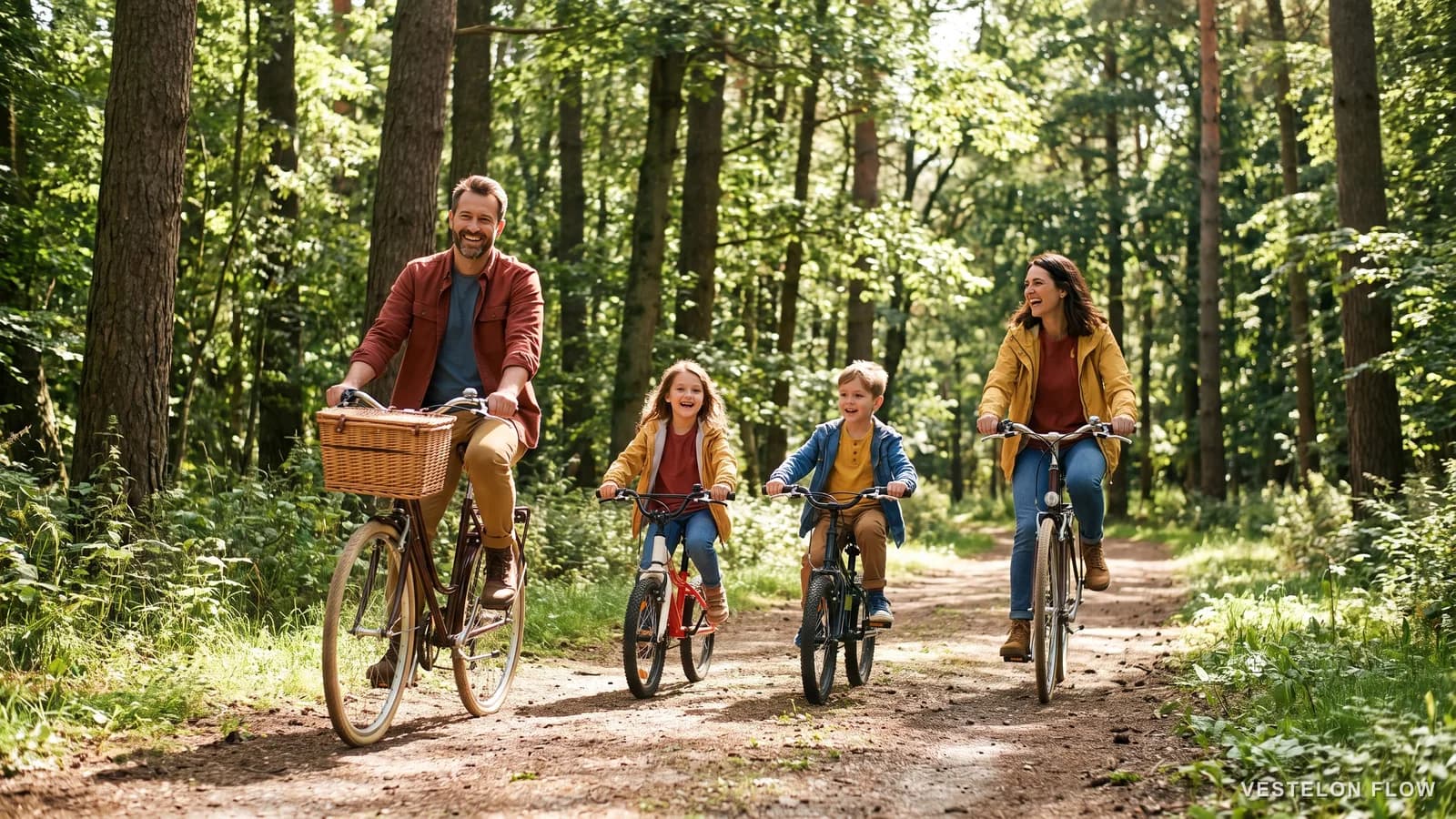
Here is the honest answer up front: your kids will not remember what the day cost. They will remember that you raced them to the big tree, that they got to lead the way on the trail, that everyone ate sandwiches on a bench and laughed when the ducks got greedy. Attention and adventure are what stick in a child’s memory. The price tag is not. And once you look at where the money actually goes on a family weekend, the picture gets even better: the two biggest costs are entrance fees and food bought on the go, and both of them are optional.
That is the whole trick. Not saying no to days out, but saying no to the two line items that quietly turn a nice Saturday into a €90 Saturday. Everything below is a practical version of that one idea, finishing with a simple way to check, using your own bank statement, what your weekends really cost.
The free classics that never fail
Every generation of parents rediscovers the same truth: the outings kids ask to repeat are usually the ones that cost nothing. They work because they hand children the two things they crave most, freedom to move and your full attention.
- Forests and trails. A forest is a playground, a science lesson and an obstacle course in one. Add a simple mission, find five different leaves, spot an animal track, build the tallest stick tower, and a plain walk becomes an expedition.
- Lakes and rivers. Skipping stones, paddling, watching fish, feeding no one’s ducks but your own imagination. Water holds a child’s attention longer than most paid attractions.
- The playground tour. Instead of your usual playground, visit three new ones in one afternoon and let the kids rate them. Different equipment, different kids, a whole new adventure for the price of getting there.
- City treasure hunts. Write ten things to find in your own town: a blue door, a statue of an animal, the oldest date carved on a building. Kids see their home city with fresh eyes, and you walk for hours without anyone asking for anything.
- Bike trips. A destination gives the ride a story. Cycle to the next village, to a viewpoint, to grandma’s house. Pack a snack for the halfway point and it becomes a proper journey.
None of these are second-best options you settle for when money is tight. For most kids under twelve, they beat the expensive alternatives outright, because nobody is queueing, nobody is rushing to get their money’s worth, and the adults are relaxed.
The packed-picnic rule: food out is the silent doubler
Look at the receipts from your last paid day out and you will usually find the same pattern: the tickets were only half the damage. A family of four buying lunch, drinks, ice cream and a snack on the go can easily spend as much again as the entrance cost. Venue food is priced for a captive audience, and hungry kids are the most captive audience there is.
So make it a rule, not a decision you renegotiate every weekend: if the family leaves the house for more than three hours, food comes with you. Sandwiches, fruit, a bottle of water each, a thermos of coffee for the adults, one treat from the supermarket instead of the kiosk. Prepared the night before, it takes fifteen minutes.
Better still, make the picnic part of the event. Kids who build their own sandwiches defend them like treasure. A blanket under a tree turns lunch into the highlight rather than an interruption. And the difference is not small: swapping bought food for a packed picnic on four weekends can keep €100 to €160 in your account in a single month, without one activity being cancelled.
Cheap-entry tactics for the days you do pay
Some outings are worth paying for, and a good museum or a castle can light a fire in a child that lasts for years. The goal is not to avoid them, it is to stop paying full price on autopilot.
- Free museum days. Many museums and galleries open free on the first Sunday of the month or one evening a week. Put the dates in your calendar at the start of the month and plan around them.
- Family tickets. Almost every attraction sells a family ticket that beats four singles, yet the counter staff rarely volunteer it. Ask every time, and check online prices before you go, as booking ahead is often cheaper too.
- Library events. Libraries have quietly become family activity centres: story hours, craft afternoons, reading challenges, school-holiday programmes, nearly all free. Ask at the desk what is coming up.
- Town festivals and open days. Harvest fairs, sports club open days, fire station visits, Christmas markets, free summer concerts. Your town hall website and the local community feed list more free weekend events than one family can attend.
- Annual passes, but only with the maths done. If the zoo pass costs three visits and you would honestly go five times, it is a genuine saving. If it just guilts you into going, it is not.
The one-paid-thing rule
Paid outings rarely blow the budget at the ticket gate. They blow it inside: the ice cream stand, the carousel, the face painting, the gift shop conveniently placed at the exit. Four small yeses can double the cost of the day, and each one was only a few euros.
The fix is a rule you announce before you leave the house: today we pay for one thing. One entrance, or one activity, and everything else is free or from the picnic bag. Then have the gift shop talk up front, in the car or at the gate: “We are paying for the aquarium today. We will walk through the shop at the end and look at everything, but we are not buying.”
Said in advance, calmly, this works far better than most parents expect. Children handle a clear no beautifully; what breaks them is the surprise no, delivered at the worst moment, in front of the stuffed sharks. Some families give each child a small fixed amount to spend or save as they choose, which quietly teaches budgeting better than any lecture.
Rainy-day home adventures
Some weekends the weather decides for you, and the fallback tends to be expensive: indoor play centres, the cinema, the shopping mall. But home can compete if you add a little theatre.
- Fort building. Every blanket, cushion and chair in the house, fairy lights if you have them, and lunch served inside the fort. This is the day out kids retell for years.
- Baking together. Messy, slow and perfect. Kids measure, stir and decorate, and the result is the afternoon snack. The flour on the floor is part of the memory.
- Cinema night, the home edition. Do not just switch on a film. Make paper tickets, draw a poster, set up a popcorn stand, dim the lights, assign seats. The ritual, not the screen, is what makes it feel special.
Why alternating free and paid weekends resets expectations
If every weekend involves a ticket, children learn that fun is something you buy, and each outing has to top the last one just to feel normal. That escalation is bad for your budget and worse for their expectations.
Alternating breaks the cycle. One weekend a forest, a bike trip or a fort; the next, maybe something paid. The free weekends teach kids that adventure comes from what you do, not what you spend, and the paid ones become genuinely special again instead of routine. The arithmetic follows on its own: two paid weekends a month instead of four, each governed by the picnic rule and the one-paid-thing rule, can cut weekend spending by well over half without anyone feeling shortchanged.
What a month of weekends really costs: the statement check
Most parents guess their weekend spending low, often by half, because it arrives as fifteen small charges rather than one big one. Parking here, ice cream there, a €7 snack, a €12 kiosk lunch. No single line looks like a problem, which is exactly why the total hides so well.
So run the check once. Open last month’s bank statement, highlight every transaction from the four weekends, and sort them into three piles: entrance fees, food and drink on the go, and everything else, such as fuel, parking and the little extras. Most families find that entrance fees plus food-on-the-go make up the clear majority, which is good news, because those are precisely the two costs this article showed you how to shrink.
If you would rather not do it by hand, VESTELON FLOW does it from a single uploaded bank statement, with no bank login and nothing to connect. It shows what your weekends, and everything else, really cost, and the first report is free. Seeing the real number once is usually all the motivation the picnic bag needs.
FAQ
Will my kids feel deprived compared to friends who do expensive outings every weekend?
Almost certainly not, as long as free weekends are framed as adventures rather than consolation prizes. Children compare experiences, not receipts, and a treasure hunt or a fort day gives them just as much to tell on Monday as a theme park does. What children genuinely notice is a stressed parent, and nothing stresses parents like an expensive day they feel obliged to enjoy.
How much should a family day out actually cost?
A free-classic day, a forest, lake or playground tour with a packed picnic, typically lands between €5 and €15 for fuel and food from home. A paid day run by the rules here, one family ticket, picnic packed, gift shop talk done, usually stays under €50 for a family of four. The same day on autopilot, with bought lunch and add-ons, routinely passes €100.
How do I find out what we are really spending on weekends now?
Take last month’s bank statement and add up every weekend transaction, or upload the statement to VESTELON FLOW and let it do the sorting for you, no bank login needed and the first report free. Either way, get the real number before you change anything. A family that knows its weekends cost €340 a month makes better choices than one that vaguely suspects “a bit too much”.
Upload one bank statement. FLOW shows exactly where your money leaks today, what it is worth once you redirect it, and the year it could set you free. Not another tracker: a plan you can act on.
Get my free reportFree first report · No card needed · No bank login · Delete anytime · GDPR-firstWhat you could tackle next
 How to build an emergency fund that actually holds
 A Kids’ Birthday Party on a Budget (They’ll Prefer It)
 Forgotten Money: 7 Legitimate Places Your Cash Is Probably Sitting Right Now
 Model Example: A Couple Saves €100 a Month. The Numbers at 5, 10 and 20 Years
 How Much Should You Have Saved by 30, 40, 50 and 60?
 How to Build Wealth on an Average Salary