Groceries in a Slovak Household: What They Cost and How to Cut the Bill by 10 to 15%
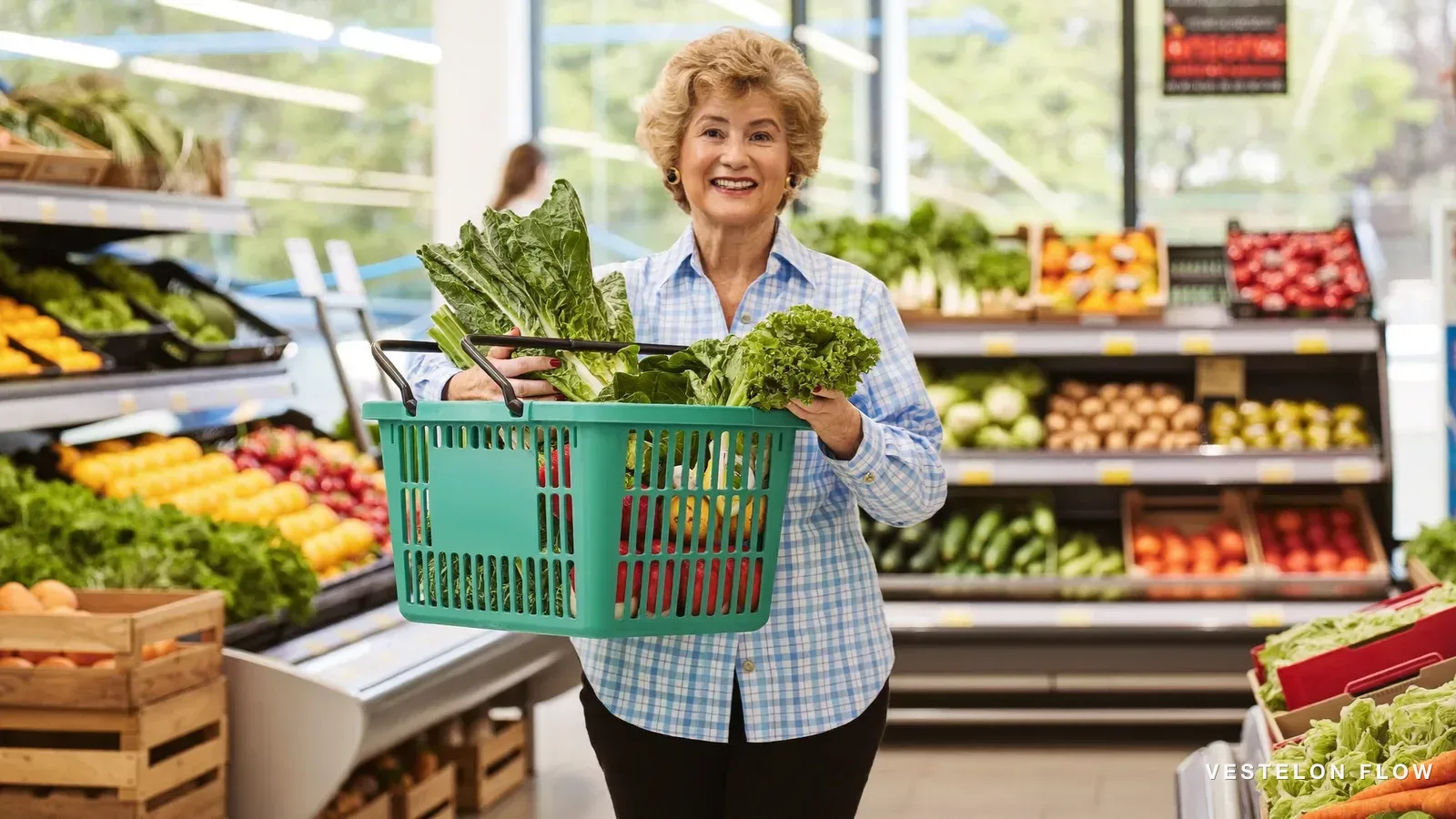
After housing, groceries are the most sensitive line in a family budget. According to Eurostat data highlighted by the Slovak daily Denník E in July 2026, people in Slovakia spent almost 20% of all expenditures on food in 2024, which is 6.5 percentage points more than the EU average. Put differently: while a typical European household leaves roughly an eighth of its budget at the food store, a Slovak one leaves almost a fifth. This article shows what that means in euros, why shopping hurts so much, what VAT did to prices, and how to cut the bill by 10 to 15% without eating worse.
How much a household really spends per month
The most detailed official picture comes from the Household Budget Survey (Rodinné účty) run by the Statistical Office of the Slovak Republic. Results for 2024, published in November 2025, confirm that food and non-alcoholic beverages sit alongside housing as the two largest consumption items.
The almost-20% share is easy to project onto your own numbers. This is an illustrative calculation, not an official statistic:
- A household with total spending of 1,200 euros a month: roughly 240 euros goes to food.
- A household spending 1,800 euros a month: roughly 360 euros.
- A family of four spending 2,400 euros a month: around 480 euros, almost 6,000 euros a year.
Your real number may well sit elsewhere. The fastest way to find it is your own bank statement: upload it to VESTELON FLOW and see your exact grocery share, no guessing and no bank login.
Are Slovak groceries really pricier than the neighbours'?
It feels that way. The data says something more surprising. According to updated Eurostat figures for 2023, after a revision in which the Slovak Statistical Office started using retail chains' checkout scanner data, the price level of food and non-alcoholic beverages in Slovakia stood at 82.3% of the EU average. That is the second lowest in the union after Romania (75.1%). Czechia stood at 96.5% and Hungary at 98.6% of the EU average, with Poland practically level with Slovakia.
So why does the shop hurt? Because the problem is not the price tag but the price-to-income ratio. Slovak wages are lower than Austrian or German ones, so even a cheaper basket carves a bigger slice out of the paycheck. That is exactly why the food share of spending is well above the EU average even though prices themselves, per Eurostat, are among the lower ones. On individual items the differences run both ways: some things are cheaper across the border, some more expensive.
VAT: basic foods carry a 5% rate since 2025
The tax reform effective 1 January 2025 redrew VAT rates: the standard rate rose to 23%, with reduced rates of 19% and 5%. Per the overview by Podnikajte.sk, basic foods stayed at 5%: meat, milk, butter, yogurts, sheep cheese bryndza, honey, fruit and vegetables, and fresh bread and pastry. Other foods carry 19%.
The result shows in prices. Per the Slovak Statistical Office, food prices rose only 1.8% on average in 2025, the least since 2017. The exception was non-alcoholic beverages, which recorded a record rise of almost 18%. The practical takeaway for your basket: basic ingredients are tax-advantaged, while sweetened and packaged drinks got markedly dearer. Whoever cooks from ingredients and drinks tap water pays noticeably less tax on food than someone buying ready-made products and drinks.
How to cut the bill by 10 to 15%: four levers
None of the following requires cheaper or worse food. It only changes how you shop.
- Plan the week ahead. A 5-to-7-day menu and a shopping list built from it. It sounds banal, but unplanned shopping is what adds items nobody ends up eating.
- Use promotions for staples, not cravings. Leaflets and store apps make sense for flour, oil, canned goods or toiletries, things you would buy anyway. A discount on something you did not want is not a saving, it is an extra expense.
- Try private labels on basics. Milk, flour, pasta, yogurts or cheese under a store brand are often made by the same producers as pricier brands. Swap a third of the basket and you will see the difference on the receipt, not on the plate.
- Cut food waste. Per the Slovak Ministry of Agriculture, the average Slovak throws away over 100 kilograms of food a year, most often bread and pastry, fruit, vegetables and cooked meals. The EU average, per the European Commission, is 132 kilograms per person (2022). Every discarded kilo was paid for at full price.
A worked example: one family, 58 euros a month
An illustrative calculation for a family of four currently spending 480 euros a month on groceries:
- Weekly menu and list-based shopping: roughly 5% saved, 24 euros.
- Private labels on a third of the basket: roughly 4%, 19 euros.
- Less discarded food thanks to planning and the freezer: roughly 3%, 15 euros.
Together that is about 58 euros a month, almost 700 euros a year, without a single cheaper or worse meal on the table. The percentages are practical estimates, not guarantees, but the direction holds: the saving is built from several small levers, not one heroic cut.
The first step is always the same: know your starting point. From one uploaded statement, VESTELON FLOW shows exactly how much went to groceries last month, broken down by store, and whether the number is moving the right way month over month. For the full budget picture, see where Slovak households' money goes. And if you are comparing with Czechia, our sibling article on groceries in a Czech household shows how the neighbour is doing.
FAQ
What share of the budget should food take? There is no official line. The EU average is roughly 13% of spending, while Slovakia sits at almost 20% per Eurostat. If your share is much higher, it usually signals low income, expensive shopping habits, or both at once.
Is it worth driving to Poland or Hungary for groceries? Per Eurostat, food price levels in Slovakia and Poland are practically identical and Hungary is dearer overall. Differences exist on individual items, but once fuel and time are counted, regular cross-border shopping does not pay off for most households.
Are private labels worse? Not automatically. Basic foods under a store brand often come from the same producers as branded goods. The sensible approach is testing item by item: if taste and ingredients fit, keep the cheaper version, if not, go back to the original.
Upload one bank statement. FLOW shows exactly where your money leaks today, what it is worth once you redirect it, and the year it could set you free. Not another tracker: a plan you can act on.
Get my free reportFree first report · No card needed · No bank login · Delete anytime · GDPR-firstWhat you could tackle next
 How Much a Child Costs in Slovakia: Kindergarten, After-School Care, Lunches, Clubs and Camps
 How to Read Your Energy Bill in Slovakia: Advances, Settlements and 2026 Prices
 The real cost of living in Bratislava: a realistic monthly budgetListed vs real: how much cheaper flats actually sell for (2026)
 Mortgage vs Rent in Slovakia 2026: The Math You Can Verify
 The real cost of living in Dubai (and how to keep more of your salary)