How to Read Your Energy Bill in Slovakia: Advances, Settlements and 2026 Prices
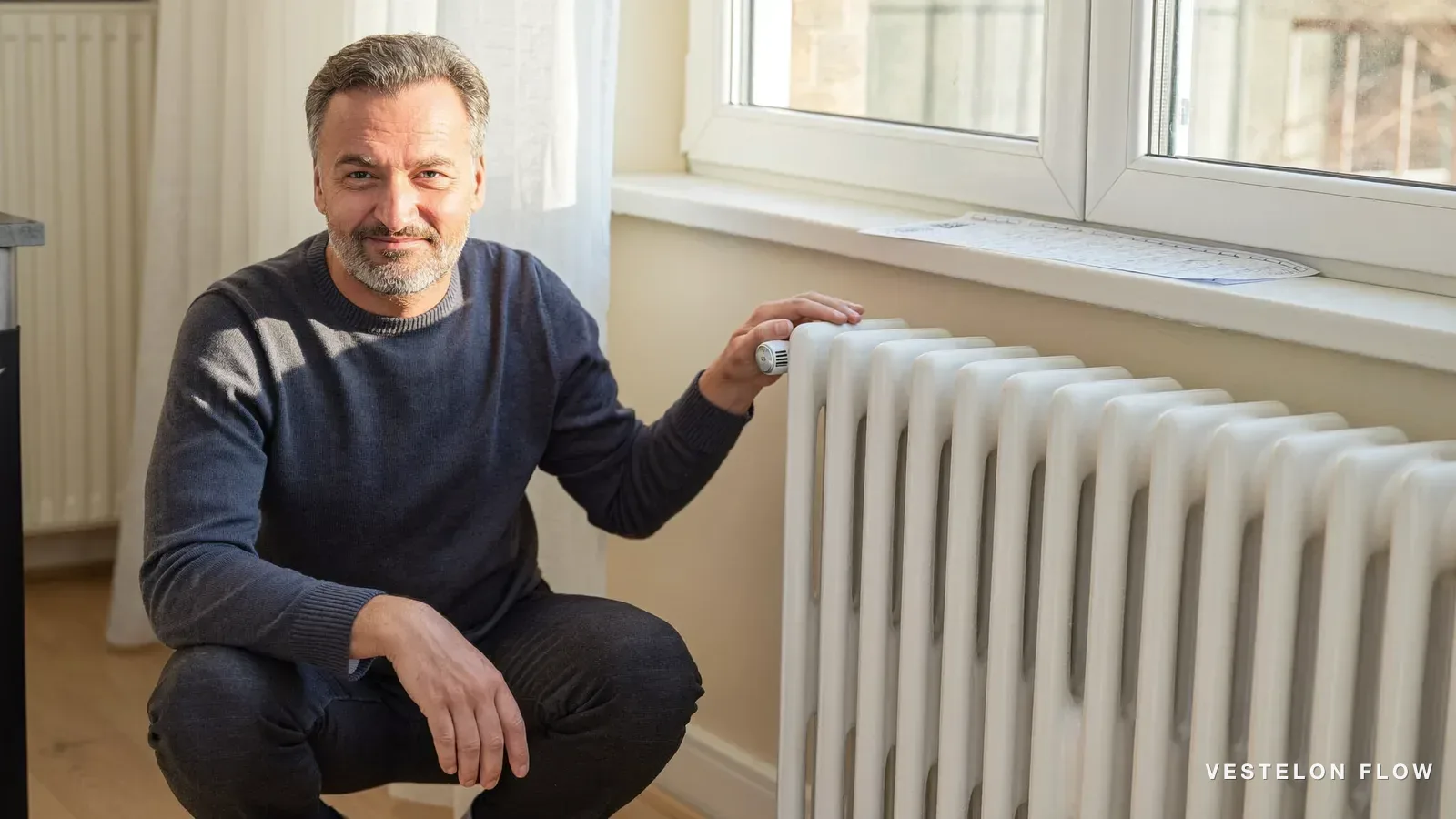
Once a year your energy supplier in Slovakia sends one document that is genuinely worth reading: the annual settlement invoice, the vyúčtovanie. Most people glance at the last line, refund or extra payment, and skip the rest. Yet that is exactly where the answer hides to a simple question: are you paying more for electricity and gas than you need to? And in 2026, when unsubsidised gas prices rose by roughly a third per the regulator ÚRSO, that question matters more than ever.
Advance payments are not a price. They are a guess
In Slovakia you do not pay for energy by actual monthly consumption. You pay advances, zálohy. They are your supplier's estimate of what you will use, usually derived from last year.
Once a year the settlement arrives. The supplier reads the meter, multiplies your real consumption by the price, and compares the result with what you paid in advances. The difference is either a refund (preplatok), you paid more than you used, or an underpayment (nedoplatok), you paid less.
One detail matters: a big refund is not a win. It means you lent your supplier your own money, interest free, for a whole year. A big underpayment is the opposite shock, one bill arriving all at once. The goal is advances that sit as close to reality as possible.
Regulated prices in 2026: what exactly changed
Household electricity and gas prices in Slovakia are set by the regulator, ÚRSO. For 2026, a few numbers are worth knowing:
- Electricity rose by 2.78% on average, per ÚRSO. Without government intervention, end prices would have climbed by roughly 22%.
- Gas without state support rose by about a third compared with the subsidised 2025 prices, per ÚRSO. For a household that also heats with gas, that means roughly €340 more per year excluding VAT.
- The state switched to targeted energy aid. Per the government it should cover roughly 90% of households; for district heating it takes the form of energy vouchers paid out in January and July, per Energie-portal.sk.
For context: per Eurostat, Slovak household electricity prices in 2025 were among the lowest in the EU, while the EU average hovered around €0.29 per kWh including taxes. A low price per kWh does not mean the invoice needs no checking, though. The needless payments hide elsewhere: in badly set advances and the wrong tariff.
The three numbers that decide your bill
The settlement invoice looks complicated, but at its core it contains three things:
- Supply. The price of the energy itself in euros per kWh. This is the part the regulator approves for your supplier and where government aid is aimed.
- Distribution. Fees for transporting the energy to your home, set not by your supplier but by the distribution company for your region. It is a significant share of the final price.
- Fixed charges. The monthly fee per delivery point, paid regardless of consumption. For gas, ÚRSO left the maximum per-delivery-point rates unchanged for 2026.
All of this hangs on your tariff (for electricity, for example D1 or D2; for gas, a band based on annual consumption). A wrong tariff is one of the most common reasons a household pays more than it must.
A worked example: a flat using 2,400 kWh
Let us put numbers on it. Per the advisory materials of SIEA, a typical household without electric heating uses roughly 2,200 kWh of electricity a year; take a flat using 2,400 kWh at an end price of about €0.19 per kWh (an estimate including distribution; the real figure depends on tariff and region).
- Real annual cost: 2,400 × 0.19 = €456.
- If your advance is €50 a month, you pay €600 a year. The settlement shows a €144 refund: you lent your supplier €12 a month for a year.
- If you pay €30 a month, you pay €360 and a €96 underpayment arrives, one bill your budget never planned for.
The sweet spot is an advance of about €38. The exact figure comes from simple maths: the real annual total from your last settlement divided by twelve, adjusted for announced price changes.
Refund or underpayment: what to do with each
A refund is normally returned by the due date printed on the invoice, in the same way you pay; if you pay via SIPO it is deducted from the next advance, per SSE and SPP. An underpayment must be settled by the invoice due date.
After the settlement, suppliers usually recalculate your advances automatically. The automation is not always your ally: after a year with unusual consumption, a renovation, a new baby, a cold winter, it will project that year forward. With most suppliers you can also adjust the advance yourself in the customer portal, for example Moje SPP, per SPP.
One more tip: both amounts are visible in your own bank statement. If you upload a statement to VESTELON FLOW, you see in one place what share of your budget energy really takes and whether your advances quietly rose year on year. The first report is free.
Five steps to stop paying needlessly
- Check your tariff. If your consumption changed, an electric boiler removed, heating switched, the band you signed years ago may no longer fit. Ask your supplier for the tariff that matches your actual annual usage.
- Report a real meter reading. Around the turn of the year especially, a self-reading prevents your consumption being estimated at a blend of old and new prices.
- Set advances to reality. Take last year's real total, divide by twelve, adjust for the 2026 changes above. Neither a hidden loan to the supplier nor a year-end shock.
- Check fixed charges and your contract. Distribution fees cannot be switched, but the supplier can. Compare the fixed monthly charges and any bundled extras you never use.
- Lower the consumption itself. The cheapest kWh is the one never used; we cover the practical side in how to lower your energy bill.
If you live in Czechia, the system of advances and settlements is similar but the prices and regulator differ; we wrote a separate guide to reading energy bills in Czechia.
FAQ
Can I lower my advances myself? Usually yes, in the supplier's customer portal or by phone. But lower them to a realistic level, not a wishful one: an advance set too low simply converts into an underpayment at settlement, sometimes a painful one.
Does the refund arrive automatically? Yes. Suppliers state they return it by the invoice due date using your usual payment route, and via SIPO it is offset against the next advance, per SSE and SPP. If it does not arrive, claim it in writing.
Is switching suppliers worth it when prices are regulated? Household prices are regulated, so differences between basic products are small. Offers differ mainly in fixed charges, bundled services and contract terms. Read the total yearly cost, not the headline rate, before signing anything.
Upload one bank statement. FLOW shows exactly where your money leaks today, what it is worth once you redirect it, and the year it could set you free. Not another tracker: a plan you can act on.
Get my free reportFree first report · No card needed · No bank login · Delete anytime · GDPR-firstWhat you could tackle next
 The real cost of living in Bratislava: a realistic monthly budgetListed vs real: how much cheaper flats actually sell for (2026)
 Groceries in a Slovak Household: What They Cost and How to Cut the Bill by 10 to 15%
 Mortgage vs Rent in Slovakia 2026: The Math You Can Verify
 How Much a Child Costs in Slovakia: Kindergarten, After-School Care, Lunches, Clubs and Camps
 Cost of Living in New Zealand: A Realistic Monthly Budget