Do You Spend More When Paying by Card? What the Research Really Says
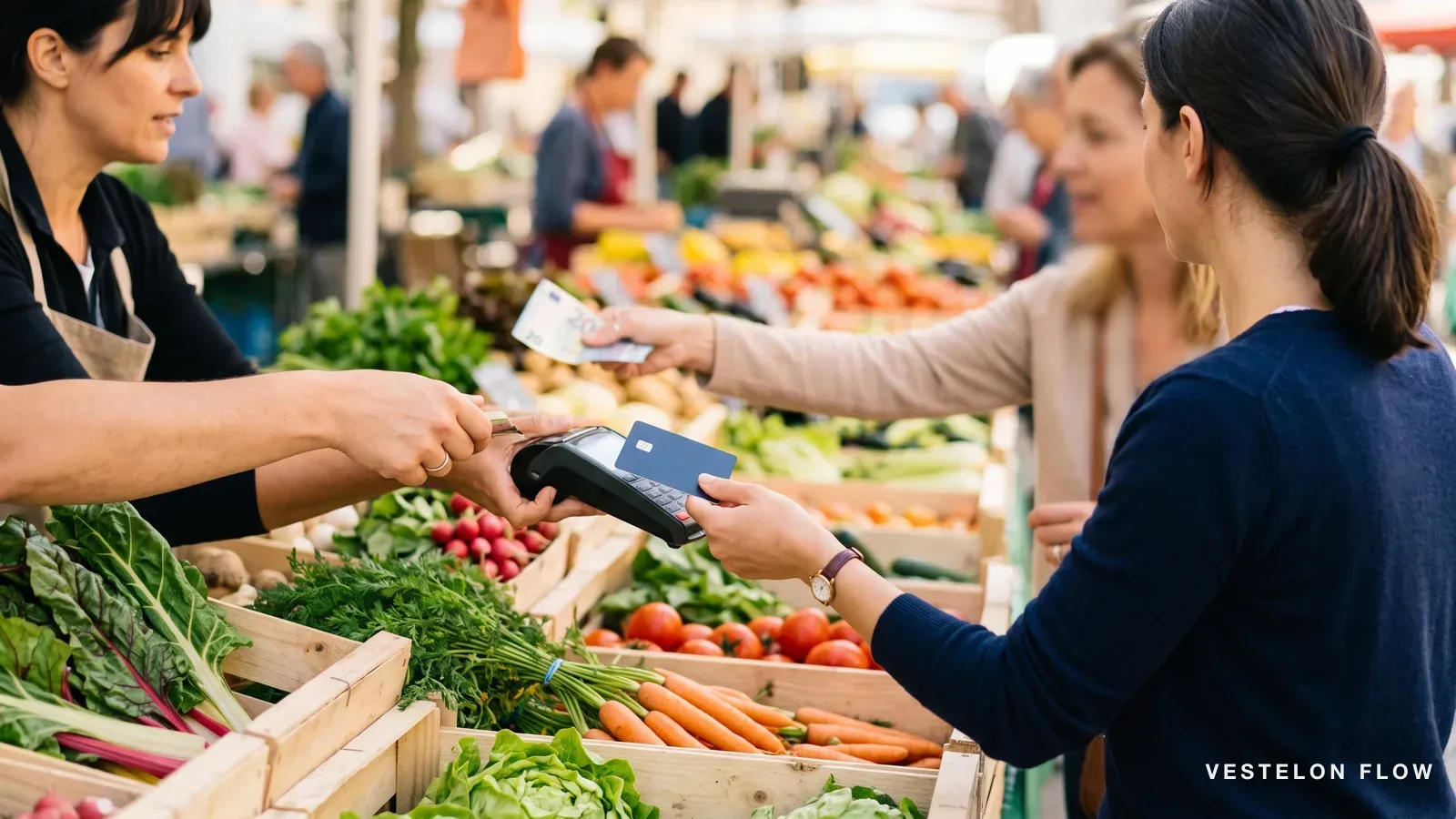
Tap, beep, done. The claim that paying by card makes you spend more is one of the most repeated ideas in personal finance. It is also one of the few that has been tested for over 40 years. The honest answer from the research: yes, cashless payments probably nudge you to spend more, but the effect is far smaller than the internet suggests, and it depends heavily on what you are buying.
The famous study behind the headlines
In 2001, Drazen Prelec and Duncan Simester at MIT ran a sealed-bid auction for tickets to a sold-out Boston Celtics game (the study "Always Leave Home Without It", published in Marketing Letters). Half of the participants were told they would pay in cash, the other half by credit card.
The result made history: the average credit card bid was roughly double the average cash bid, a premium of up to 100 percent. Almost every "cards make you spend twice as much" headline you have ever seen traces back to this one experiment.
Two caveats the headlines skip. It was a small, one-off auction for a scarce, exciting prize, and it measured willingness to pay, not everyday spending. Nobody serious claims your grocery bill doubles when you tap.
What 40 years of studies say when you add them all up
In 2024, Lachlan Schomburgk, Alex Belli and Arvid Hoffmann published a meta-analysis of the whole field in the Journal of Retailing: 392 effect sizes from 71 papers, titled "Less cash, more splash?".
Their overall finding: the cashless effect is real and statistically significant, but small, with a standardized effect size of g = 0.135. In plain language, that is a gentle nudge, not a doubling. Individual studies ranged from strongly negative to strongly positive, so context matters more than the payment card itself.
Just as interesting: the effect has weakened over recent decades as people became used to paying digitally, and it tends to be stronger in periods of economic growth than in downturns.
Where the effect is strong, weak, and missing
The meta-analysis found the size of the effect depends on the situation:
- Strongest for status purchases. Conspicuous consumption, think jewellery or an impressive dinner, shows the clearest extra spending when payment is cashless.
- Absent for tips and donations. Pro-social spending did not rise with cashless payment, contrary to what many charities and restaurants assumed.
- The gadget does not matter. The authors found no evidence that card versus phone versus other cashless features changes the effect.
So the fair summary is: paying cashless mostly loosens spending where ego and impulse are involved, and barely moves it where habits are fixed.
Why paying by card feels different
The usual explanation is the pain of paying, a term from Drazen Prelec and George Loewenstein's 1998 paper "The Red and the Black" in Marketing Science. Handing over banknotes makes the cost vivid. A tap hides it.
Importantly, this is not about borrowed money. In a 2015 incentivized experiment in Denmark, Emma Runnemark, Jonas Hedman and Xiao Xiao found that people were willing to pay more with a debit card than with cash for the same everyday products, even after controlling for how much cash participants had on hand (Electronic Commerce Research and Applications). Your own money, spent invisibly, behaves the same way.
What a small effect means in euros: a model example
The meta-analysis reports a standardized effect, not one universal percentage, so any euro figure is an illustration. Treat the following as a model example, not a number from the studies.
Suppose the cashless nudge inflates your flexible spending, eating out, impulse buys, treats, by around 2 to 3 percent. On €600 of flexible spending a month, that would be roughly €12 to €18 a month, or €144 to €216 a year: €600 × 0.02 = €12, and €600 × 0.03 = €18.
Real money, worth catching. But notice what the research points to: the bigger risk is not the daily coffee, it is the occasional status purchase where the effect is strongest and a single decision can cost hundreds.
Practical takeaways for a cashless country
The classic advice, "just use cash", is dying with cash itself. In Sweden, only 5 percent of people paid cash for their most recent in-store purchase according to the Riksbank's September 2025 payment survey. In much of Europe you cannot realistically switch back. What you can do is rebuild the friction cash used to provide:
- Turn on instant payment notifications. The mechanism behind the effect is invisibility, so make every payment visible again.
- Give flexible spending its own card. One account, topped up weekly with a fixed amount, restores the "empty wallet" signal digitally.
- Use a 24-hour rule for status purchases. That is exactly where the research says the cashless nudge bites hardest.
- Review a full month once a month. Salience beats willpower: seeing the total is the antidote to a hundred invisible taps.
- Stop worrying about card tips and donations. The evidence says going cashless is not inflating those.
If your card use peaks when travelling, our guide on card versus cash abroad covers the fees side of the same question.
And if you want to know what invisible spending looks like in your own account, you can see it in about a minute: upload one bank statement at app.vestelonflow.com and VESTELON FLOW shows where your money actually goes. The analysis runs in your browser, no account and no bank login needed, and nothing leaves your device without your consent.
FAQ
So is the "cards double your spending" claim false? As a general rule, yes. It comes from one 2001 auction experiment measuring willingness to pay for scarce tickets. Across 71 papers, the average effect of cashless payment on spending is small (g = 0.135).
Does paying by phone or watch make it worse than a card? The 2024 meta-analysis found no evidence that the specific cashless method changes the effect. Invisibility is the mechanism, and all of them are invisible.
Would switching back to cash save me money? Possibly a little, mainly on impulse and status purchases. But the effect has weakened over time, and in largely cashless countries the practical fix is visibility: notifications, a capped spending card, and a regular look at your full statement.
Upload one bank statement. FLOW shows exactly where your money leaks today, what it is worth once you redirect it, and the year it could set you free. Not another tracker: a plan you can act on.
Get my free reportFree first report · No card needed · No bank login · Delete anytime · GDPR-firstWhat you could tackle next
 The four questions your money has never answered
 Is it safe to upload your bank statement? An honest answer
 Your financial data is not an advertising product
 What happens to your statement in FLOW?
 The quiet magic of compounding (why small amounts win)
 Your freedom number: how much is actually enough?