How to Stop Eating Out So Much (Without Hating Your Life)
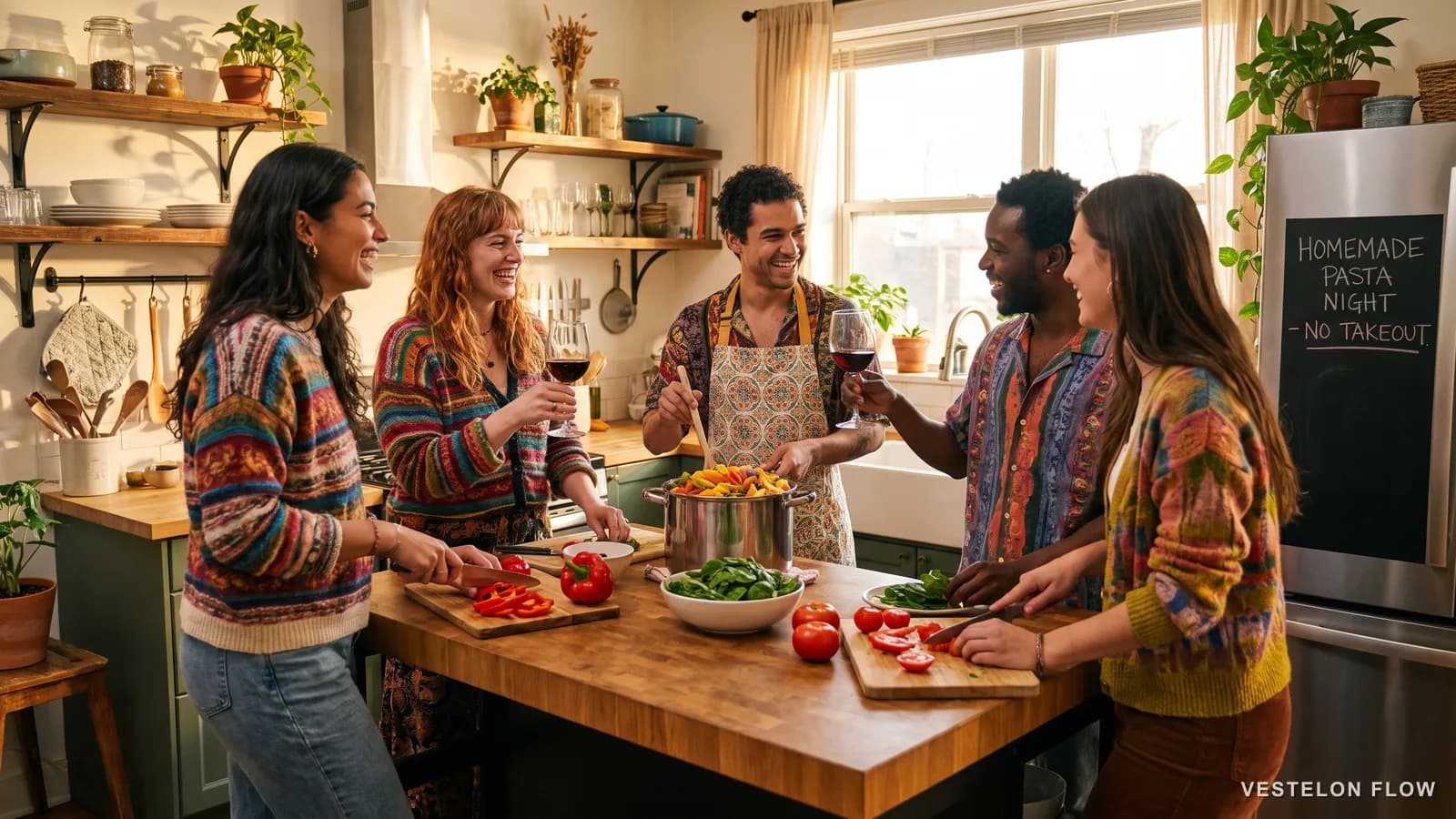
Here is the whole method up front. First, see your real monthly eating-out number, because restaurants, delivery, coffee and work lunches live in four separate mental boxes and the true total is almost always far bigger than your guess. Second, cut only the automatic kind, the tired Tuesday delivery you barely remember choosing. Third, deliberately keep the social kind, the dinners with people you actually like. Eating out too much is not a willpower problem. It is a habit problem with a very good marketing department, and habit problems are solved with visibility and friction, not with guilt.
Step one: see the invisible total
Almost nobody knows what they really spend on food they did not cook, because the spending is split across boxes that never get added together. The Friday restaurant feels like a treat. The delivery feels like survival. The coffee feels like a rounding error. The work lunches feel like a cost of having a job. Each one is small enough to ignore, and together they are often the second or third biggest expense of the month.
The fix takes minutes. Add up every restaurant, delivery app, cafe and lunch spot on one bank statement, or upload that statement to VESTELON FLOW, no bank login needed, and see the real total, merchant by merchant. The first report is free.
Expect a shock. People who guess €150 routinely find €400. That is not a reason to feel bad; it is the engine of this method. You cannot negotiate with a number you have never seen, and once you have seen it, your brain quietly starts working for you instead of against you.
Why you actually order (it is not laziness)
If eating out were a character flaw, shame would have fixed it years ago. It has not, because the real causes have nothing to do with character.
- You are tired. Most orders happen after work, when your energy and patience are at their lowest point of the day. Cooking asks something of you exactly when you have the least to give.
- There is no plan. An empty fridge at 6pm is not a food problem, it is a decision problem. When dinner is an open question, the app is the easiest answer.
- Decision fatigue is real. By evening you have made hundreds of small choices. “What should I cook?” is one choice too many, and delivery removes it completely.
- The apps are engineered. Saved card, saved address, your usual order one tap away, a push notification with a discount at exactly the hour you are weakest. Millions of euros went into making ordering feel effortless. You are not weak. You are outgunned.
Once you see it this way, the strategy becomes obvious. You do not need more discipline at 6pm. You need fewer situations where 6pm-you has to make the decision at all.
The keep-list: social eating stays
This is the part most money advice gets wrong, and the reason most attempts fail by week three. You are not trying to spend zero on eating out. Some of it is among the best money you spend all month.
Dinner with friends, the anniversary restaurant, the Saturday lunch that turns into a three-hour conversation: these deliver enormous joy per euro. They are memory, connection and the reason restaurants exist. Cutting them saves a little money and costs a lot of life, which is why the diet-style approach collapses. Nobody sustains a plan that makes them lonely.
So write the keep-list explicitly. Look at your statement and mark the meals you genuinely remember and would happily pay for again. Those are protected. They are not the problem, and treating them as the problem is how people end up hating the whole project.
The swap-list: weekday autopilot goes
Now mark the rest, and be honest. The Tuesday pad thai eaten alone in front of a screen. The third burrito this month, ordered not because it is great but because it was one tap. The lunch bought because you left home with no plan. You do not remember these meals and you did not really choose them; they were the default that fired when you were tired.
This is the swap-list, and on most statements it is 60 to 80 percent of the total. That is the good news hiding inside the shocking number: most of your eating-out spending is not joy you would have to give up. It is autopilot you will not even miss, provided you replace it with something that works at 6pm on a bad day.
Friction beats willpower
The delivery apps won by removing every obstacle between hunger and purchase. You win by putting a few obstacles back. None of these require discipline in the moment; they are decisions you make once, when you are rested, that protect you when you are not.
- Delete the delivery apps. Not forever, and not as punishment. The websites still exist for the nights you truly choose to order. You are only deleting the one-tap path, and that single change kills a remarkable share of impulse orders.
- Remove your saved cards. Typing sixteen digits is a built-in cooling-off period. Half the time, the craving does not survive it.
- Cook ahead on Sunday. Ninety minutes, two big dishes, portioned into boxes. You are not meal prepping for fitness models, you are stocking answers to the question “what is for dinner?” so that future-you never has to face it cold.
- Use the 20-minute rule. Delivery takes 30 to 45 minutes to arrive. If something in your kitchen can be on a plate in 20, ordering stops making sense even to your tired brain. Keep the ingredients for three ultra-fast meals in the house at all times, and you have beaten the app at its own game: speed.
The lunch problem
Weekday lunch is its own beast, because it happens at work, under time pressure, five times a week. At €12 a day that is roughly €250 a month, quietly, forever.
The answer is meal prep that survives real life, meaning you plan for your worst week, not your best. Cook double at dinner and box the extra portion; that is lunch with zero added effort. And treat your freezer as your fast-food outlet: from every big batch, freeze two portions in single-serving boxes. Within a month you have a private menu of eight or ten meals ready faster than any lunch queue. When Wednesday falls apart, and some Wednesday always does, you grab a box instead of your card, and buying lunch becomes the occasional choice instead of the daily default.
Cook lower-effort, not gourmet
A common trap: people decide to cook more, buy a beautiful cookbook, attempt three ambitious recipes, exhaust themselves, and go back to delivery within two weeks. The goal was never restaurant food at home. The goal is decent food with almost no thinking.
So skip recipes and build a roster instead: ten cheap, repeatable dinners you can make from memory in 25 minutes or less. Pasta with tomato sauce and whatever vegetable is in the fridge. Fried rice from leftover rice and eggs. A sheet of roasted vegetables with sausages. Omelettes. A big soup. Tacos from a kit. They do not need to impress anyone. They need to exist in your hands without a phone propped against the salt. Repetition is the feature: when dinner requires no decisions, cooking finally costs less effort than ordering, and the system runs on its own.
The monthly re-check
One statement started this; one statement a month keeps it honest. Each month, look at the eating-out total again and ask two questions. Did the autopilot number go down? Did the social meals stay? If the total dropped because you stopped seeing your friends, correct course, because that is the diet mistake wearing a budgeting costume. If the total crept back up, do not moralise about it. Find which default broke, usually a reinstalled app or an empty freezer, and fix the default.
Upload the new statement to VESTELON FLOW and the comparison is done for you: the same merchants, the same categories, this month against last. Most people see the number fall hard in month one, wobble in month two, and settle somewhere sane by month three, often €200 to €300 lower with the social life fully intact. That is money redirected from meals you never remembered to a future you actually chose, without one evening of willpower.
FAQ: eating out less without misery
How much should I spend on eating out per month? There is no universal number; there is only your number, split into meals you remember and meals you do not. A useful starting rule: protect the social meals, cut the autopilot ones, and let the total land where it lands. For most people that means keeping 20 to 40 percent of their current spend and feeling no loss at all.
Is it really cheaper to cook than to order delivery? Almost always by a factor of three to five per meal, once you count delivery fees, service fees and tips. A €16 delivered dinner is routinely a €3 to €5 home version, and even solo cooks save hundreds per year on weeknights alone.
How do I find out how much I actually spend on restaurants and delivery? Read one full bank statement and total every restaurant, cafe and delivery line, or upload the statement to VESTELON FLOW and get the full breakdown in minutes, with no bank login. The first report is free, and seeing the real number once does more than a year of good intentions.
Upload one bank statement. FLOW shows exactly where your money leaks today, what it is worth once you redirect it, and the year it could set you free. Not another tracker: a plan you can act on.
Get my free reportFree first report · No card needed · No bank login · Delete anytime · GDPR-firstWhat you could tackle next
 Where does your money actually go? How to find out in minutes
 How to read your bank statement and spot the money leaks
 Your Bank Statement Knows You Better Than You Do: 7 Things It Reveals in 5 Minutes
 How Much People Really Spend on Coffee in a Year
 The 9 Money Mistakes That Quietly Keep You Broke
 Best Free Tools to See Where Your Money Goes (2026)