Cost of Living in Switzerland: A Real Monthly Budget
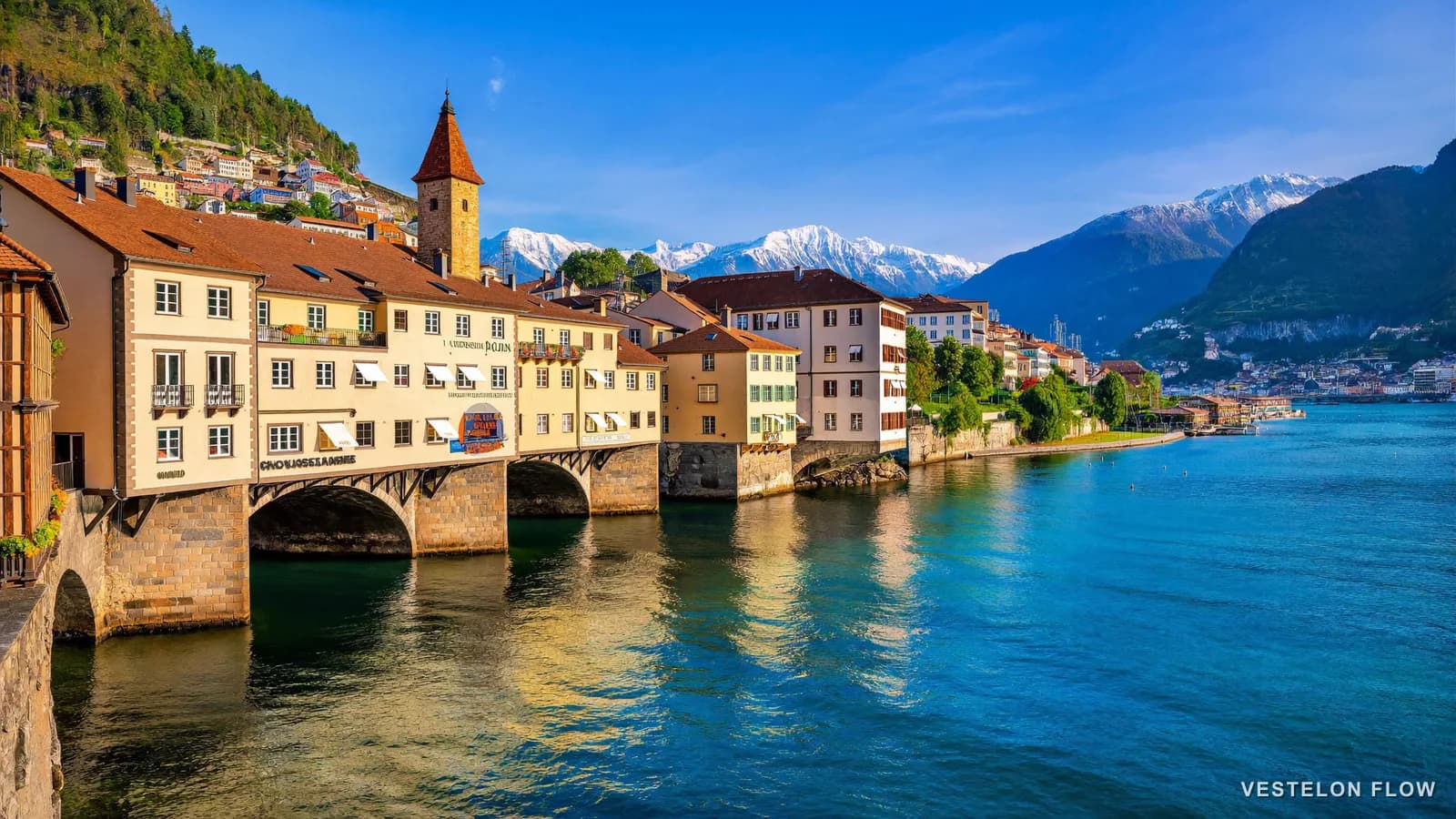
For a single person, a realistic monthly budget in Switzerland runs roughly CHF 3,500 to CHF 5,500, depending heavily on the canton and your rent. A couple sharing a flat might land around CHF 5,500 to CHF 8,000. These are estimates, not quotes. Switzerland is genuinely one of the most expensive countries on earth, but median salaries are also among the highest, so the picture is more balanced than the headline prices suggest. Below is a clear, honest breakdown.
Rent: your biggest line by far
Housing dominates a Swiss budget. A one-bedroom flat in the centre of Zurich or Geneva typically runs CHF 1,900 to CHF 2,800 per month. Move to a smaller or quieter canton and the same flat can drop to CHF 1,100 to CHF 1,700. These are rough estimates and vary by neighbourhood and building age.
- Zurich / Geneva, 1-bed central: CHF 1,900 to 2,800 (estimate)
- Basel / Bern / Lausanne, 1-bed: CHF 1,400 to 2,000 (estimate)
- Smaller cantons (Jura, Valais, Fribourg): CHF 1,000 to 1,600 (estimate)
Expect to provide a deposit of up to three months rent, held in a blocked account, plus proof of income and often a debt-collection extract.
Groceries: high, and no way around it
Food is one of the sharpest shocks for newcomers. A single person eating mostly at home spends roughly CHF 400 to CHF 600 per month; a couple closer to CHF 700 to CHF 1,000. Migros and Coop dominate, while Aldi, Lidl and Denner are noticeably cheaper. Some rough estimates: a litre of milk around CHF 1.60, a loaf of bread CHF 2.50 to CHF 4, a kilo of chicken breast CHF 18 to CHF 28. Buying the in-house budget lines (M-Budget, Prix Garantie) cuts the bill meaningfully.
Health insurance (Krankenkasse): mandatory
Basic health insurance is legally required for everyone, and you choose your own provider. Premiums vary by canton, age and the deductible (Franchise) you pick. A rough estimate for an adult is CHF 250 to CHF 450 per month for basic cover, higher in cantons like Geneva and Basel-Stadt. This is a non-advisory note: compare offers on the official comparison tools and pick what fits your situation, ideally before any deadline that applies to you.
Transport: expensive to own, excellent to share
The Swiss public network is one of the best in the world, and you do not need a car in most cities. Key points:
- Half-Fare Card (Halbtax): around CHF 190 per year and it halves nearly every train, bus, tram and boat fare. For most residents it pays for itself within weeks.
- GA travelcard: unlimited national travel for roughly CHF 3,000 to 4,000 per year, worth it for heavy commuters.
- Local monthly passes: roughly CHF 80 to 100 per zone-set.
- Owning a car: petrol, insurance, parking and the annual motorway vignette add up fast, often CHF 600 to 900 per month all-in (estimate).
Utilities, mobile and internet
For a one-bedroom flat, electricity, heating and water often run CHF 100 to CHF 250 per month (estimate), though some rentals include heating in the service charge. A mobile plan with generous data is roughly CHF 20 to CHF 60 per month, and home internet CHF 40 to CHF 80. Budget operators like Yallo and Wingo undercut the big three (Swisscom, Sunrise, Salt).
Eating out and everyday extras
Restaurants are where the high cost is most visible. A simple lunch menu is often CHF 18 to CHF 25, a mid-range dinner for two with wine easily CHF 100 to CHF 160, and a coffee CHF 4.50 to CHF 6 (all estimates). A gym membership runs CHF 60 to CHF 120 per month. None of this is essential, but it is where Swiss budgets quietly inflate.
A sample monthly budget (single person, mid-size city)
- Rent (1-bed): CHF 1,500
- Health insurance: CHF 320
- Groceries: CHF 500
- Transport (Halbtax plus local): CHF 120
- Utilities, mobile, internet: CHF 250
- Eating out and leisure: CHF 350
- Total: roughly CHF 3,040 (estimate, before tax)
Remember that Swiss tax is generally not deducted at source for residents (foreign workers on permits often are), so set money aside separately for it.
The high-cost, high-salary balance
The honest counterweight to these numbers is income. Median full-time gross salaries sit well above CHF 6,500 per month, and many qualified roles pay considerably more. So while a coffee costs double what it does in neighbouring countries, the ratio of pay to prices often works out better than expats expect. The catch is that lifestyle creep is easy here, which is exactly why tracking matters.
Cross-border shopping and ways to save
- Shop across the border: residents near Germany, France, Austria or Italy regularly buy groceries there, where prices can be 30 to 50 percent lower. Mind your VAT-free and customs limits.
- Use discount supermarkets and in-house budget ranges for staples.
- Get the Halbtax immediately if you take more than a couple of trains a month.
- Switch to a budget mobile and internet provider rather than the big incumbents.
- Review your health insurance deductible each year, since the right Franchise depends on how much care you actually use.
- Cook at home; the gap between groceries and restaurants is enormous.
Before you can cut anything, you need to see where the money actually goes, and that is rarely where people assume. VESTELON FLOW reads one bank statement and shows you exactly where your money went, sorted into clear categories, with no bank login and a free first report. It is the fastest way to find out whether your real Swiss budget matches the one in your head.
Common questions
Is Switzerland really the most expensive country to live in?
It is consistently among the top few worldwide, especially for rent, groceries, eating out and services. But because salaries are also among the highest, your spending power is not as squeezed as the raw prices suggest, particularly if you live outside Zurich and Geneva.
How much do I need to live comfortably as a single person?
A rough estimate is CHF 4,000 to CHF 5,500 per month before tax to live comfortably in a city, less in a smaller canton with cheaper rent. Comfortable here means a decent flat, eating out occasionally and saving something each month.
Can I save money living in Switzerland?
Yes, and many residents save a healthy share of their income precisely because pay is high. The keys are keeping rent in check, using discount supermarkets and the Halbtax, and watching the small recurring costs. Seeing your spending clearly is the first step, which is what a tool like FLOW is built for.
Upload one bank statement. FLOW shows exactly where your money leaks today, what it is worth once you redirect it, and the year it could set you free. Not another tracker: a plan you can act on.
Get my free reportFree first report · No card needed · No bank login · Delete anytime · GDPR-firstWhat you could tackle next
 Cost of Living in Italy: A Real Monthly Budget
 Cost of Living in Vienna: A Real Monthly Budget
 Cost of Living in Spain: A Real Monthly Budget
 Cost of Living in Amsterdam: A Real Monthly Budget
 Cost of Living in Denmark: A Real Monthly Budget
 Cost of Living in Belgium: A Real Monthly Budget