Money Management in Poland: A Practical Guide

Managing money in Poland comes down to four habits: know your real monthly cashflow in zloty, audit your recurring subskrypcje and polecenie zaplaty charges, build a buffer measured in survival months, and watch the fees and high-interest debt that quietly drain a household. You do not need a spreadsheet or a budgeting course to start. You need one honest look at where your money actually goes, and the fastest way to get that look is your bank statement.
The Polish context: why this matters now
Poland runs on the zloty (PLN, written zl), not the euro, so euro-area advice rarely fits. Salaries, rents, and prices all move in their own rhythm here, and the last few years have pushed that rhythm hard. Rents in Warsaw and Krakow have climbed faster than many wages, energy bills have swung with regulated tariffs, and the weekly food shop costs noticeably more than it did a couple of years ago. None of that is a moral failing on your part. It is the backdrop every Polish household is budgeting against.
Polish banking culture has its own quirks too. Many current accounts (konto osobiste) are advertised as free, but the small print attaches conditions: a minimum monthly card spend, a minimum incoming transfer, or a minimum balance. Miss the condition and the account fee, card fee, or even an inactivity fee reappears. ATM withdrawals outside your bank’s network can carry a charge, and currency conversion on foreign cards or trips often hides a markup. These are small numbers individually. Across a year they add up to real money.
There is also a strong direct-debit habit. Poles widely use polecenie zaplaty and card-on-file subskrypcje for utilities, phone plans, insurance, streaming, gym memberships, and software. This is convenient, and it is exactly why recurring charges accumulate unnoticed. A subscription you signed up for once keeps billing every month whether you use it or not. The good news is that Poland also has a genuinely saving-aware culture. Many people here already track spending carefully and dislike waste. This guide is about giving that instinct better data.
A practical system that works in zloty
You can run your money on four moves. None of them require an app subscription or a finance degree.
1. Audit recurring payments and subscriptions. List every charge that repeats every month or year: phone, internet, streaming, gym, insurance, cloud storage, that app you tried once. For each one ask a blunt question: did I use this in the last month, and would I sign up again today at this price? Cancel anything that fails both. In most households this single pass frees up somewhere between 50 and 300 zl a month, money that was leaving on autopilot.
2. Know your real monthly cashflow. Not your salary, your cashflow. Add up what actually lands in your account each month, then subtract what actually leaves. The gap is the only number that decides whether you are building wealth or slowly sliding backwards. Most people overestimate this gap because they remember the big, deliberate purchases and forget the steady drip of small ones.
3. Build a buffer in survival months. Stop thinking of savings as an abstract pile and start thinking in survival months: if your income stopped today, how many months could your savings cover essential costs (rent, food, utilities, transport)? One month is fragile. Three months is comfort. Six months is freedom to make decisions without fear. Pick the next whole number above where you are and aim there. In a market with rising Warsaw and Krakow rents, this buffer is what stops a single bad month from becoming a debt spiral.
4. Watch fees and high-interest debt. Two things quietly undo good budgeting in Poland. The first is account and card fees you could avoid by meeting a condition or switching banks. The second, and far more dangerous, is high-interest debt: credit card balances carried month to month, chwilowki (short-term loans), and buy-now-pay-later plans stacked on top of each other. Interest on these can dwarf anything you save by trimming subscriptions. If you carry such debt, clearing it is usually the highest-return move available to you, better than any savings rate.
How one wyciag reveals your leaks
Here is the shortcut. Your bank statement (wyciag) already contains the complete, honest record of your money. You do not have to remember anything or guess. Every subscription, every fee, every recurring transfer is sitting in that file, in zloty, with dates.
The problem is that a wyciag is hard to read by eye. It is dozens or hundreds of rows, mixing a 12 zl streaming charge into the same column as rent and groceries, often with cryptic merchant names. The patterns that matter, the same amount hitting the same date every month, the fee you forgot, the free trial that started charging, are invisible when you scroll. They only appear when something groups the transactions for you.
That is the job we built VESTELON FLOW to do. You upload one Polish bank statement, with no login and no account setup, and you get an instant read of your money: your real monthly cashflow, a list of the recurring subscriptions and direct debits draining you, the fees you are paying, and how many survival months your current balance buys. It is the same four-move system above, done automatically from your own data instead of by hand. Your first report is free, so you can see your leaks before deciding anything.
The reason this works is simple. Generic advice cannot tell you which subscription you forgot or which fee your bank is charging. Only your statement can. Reading it, properly, once a quarter is the single highest-value money-management habit available to a Polish household.
Putting it together
Money management in Poland is not about deprivation or complicated systems. It is about visibility. Most people are not overspending dramatically; they are leaking steadily through forgotten subscriptions, avoidable fees, and a cashflow they have never actually measured. Pull one wyciag, see the truth, cancel what you do not use, build your buffer in survival months, and kill any high-interest debt first. Do that, and the rising costs of rent, energy, and food become something you can plan around instead of something that quietly wins.
FAQ
Do I really need a budgeting app to manage money in Poland? No. A budget is only as good as the data behind it, and your bank statement already holds that data. Reading your wyciag honestly, once a quarter, beats most apps because it shows what actually happened rather than what you planned. Tools help when they turn that statement into a clear picture fast, which is the only thing you cannot do quickly by hand.
How do I find subscriptions I forgot I was paying for? Look at your statement for charges of the same amount on roughly the same date each month, especially small ones (10 to 60 zl) with unfamiliar merchant names. These are usually subskrypcje or polecenie zaplaty you set up once and stopped noticing. Cancel anything you did not knowingly use in the last month.
How big should my emergency buffer be in zloty? Think in survival months rather than a fixed figure, because the right amount depends on your essential costs. Calculate your monthly essentials (rent, food, utilities, transport) and multiply by the number of months you want covered. Three months of essentials is a solid first target; six gives real peace of mind, which matters more in cities where rents are still climbing.
Upload one bank statement. FLOW shows exactly where your money leaks today, what it is worth once you redirect it, and the year it could set you free. Not another tracker: a plan you can act on.
Get my free reportFree first report · No card needed · No bank login · Delete anytime · GDPR-firstWhat you could tackle next
 Money Management in Austria: A Practical Guide
 Money Management in the Netherlands: A Practical Guide
 Money Management in Germany: A Practical Guide
 Money Management in Ireland: A Practical Guide
 Money Management in Switzerland: A Practical Guide
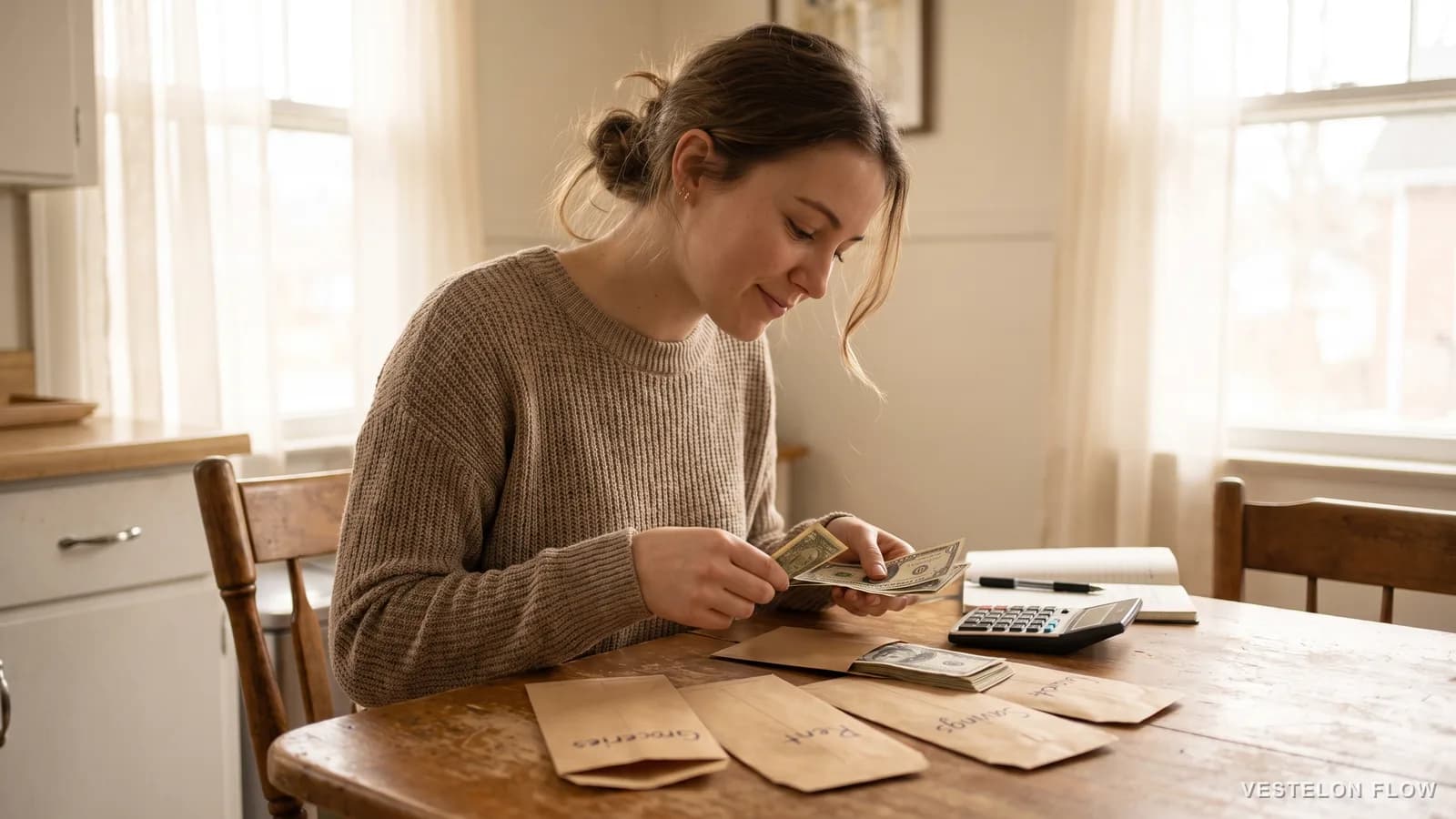 The Envelope Budgeting Method, Step by Step