The Envelope Budgeting Method, Step by Step
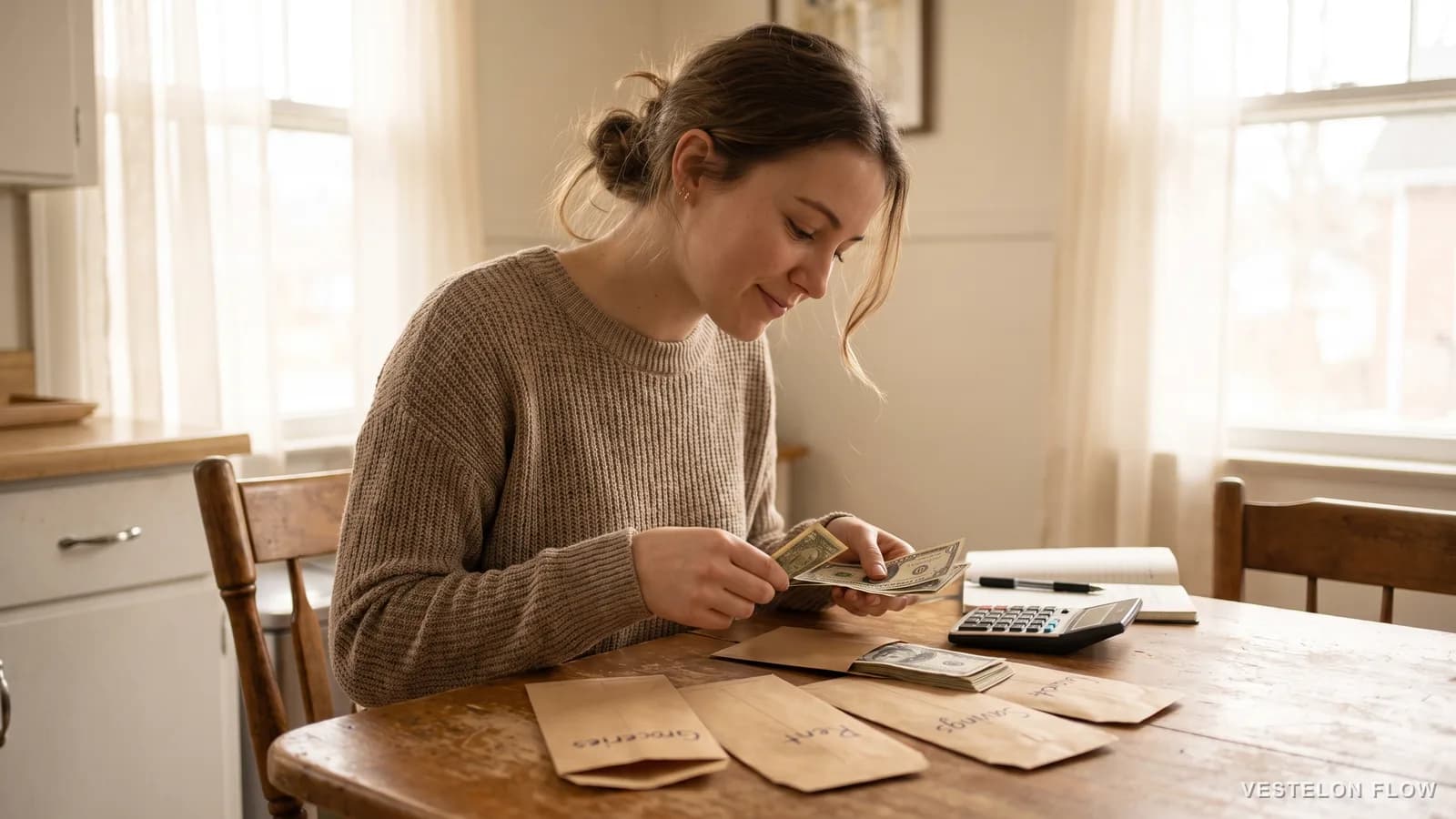
The envelope budgeting method is a simple rule: you divide your monthly income into separate envelopes, one per spending category, and you only spend what is inside each envelope. When the grocery envelope is empty, you stop buying groceries until next month. There is no overdraft, no I will deal with it later, no quiet drift into your overdraft. The limit is physical, or in a modern version, digital, and it does not move.
It is one of the oldest budgeting systems still in use, and it survives because it works for the one problem most budgets fail to solve: actually stopping the spending before the money is gone.
What the envelope method actually is
The idea goes back to handling cash. On payday you would cash your income, then physically split the notes into labelled envelopes: rent, food, fuel, eating out, fun, savings. Each envelope held the exact amount you had decided that category could spend for the month. You paid for things from the matching envelope. When an envelope ran dry, that category was closed until the next pay cycle.
The power is in the constraint. A normal current account shows one big balance, which makes it very easy to spend next month’s rent on a good weekend without noticing. Envelopes break that single number into many small, honest limits. You can see exactly how much fun money is left, because you can literally look in the envelope.
How to set it up, step by step
- Know your real monthly income. Use take-home pay, the money that actually lands in your account, not your gross salary. If your income varies, use a conservative average of recent months.
- List your categories. Keep it to roughly eight to twelve. Common ones: rent or mortgage, utilities, groceries, transport, eating out, subscriptions, personal and fun, savings, debt repayment. Too many envelopes and the system becomes admin you will quit.
- Assign an amount to each envelope. This is the hard part, and where most people guess. Fixed bills are easy, you know your rent. Flexible categories like groceries, eating out, and fun are where the real money leaks, and where a wrong number breaks the whole budget. Your envelopes have to add up to your income or less.
- Fund the envelopes on payday. Put the cash in, or move the money into separate digital pots, the moment you get paid. Funding first is what makes this work, you are deciding before you spend, not after.
- Spend only from the matching envelope. Buying food comes out of the food envelope. When it is empty, you are done in that category for the month.
- Handle the overflow honestly. If you blow the eating-out envelope, the rule is to move money in from another envelope and accept that the donor category now has less. You do not magic up new money. That trade-off is the lesson.
- Review at month end. Look at which envelopes were too tight and which had cash left over, then adjust next month’s amounts. The first two or three months are calibration.
The strengths
The envelope method gives you hard spending limits, and that is its whole reason to exist. Apps that just track spending tell you the damage after it is done. Envelopes stop the spending in the moment, because the money to spend simply is not there.
It is especially strong for overspenders and for anyone trying to break a habit of impulse buying. The friction is the feature: having to look in an empty envelope and decide whether to raid another category forces a conscious choice every time. It is also wonderfully concrete. There is nothing to interpret, no chart to read. Either there is money in the envelope or there is not.
The friction
The method is rigid by design, and that rigidity has a cost. Real life does not respect your categories. An unexpected car repair, a friend’s birthday, a price rise at the supermarket, all of these strain a system built on fixed monthly amounts. You end up shuffling money between envelopes, which can feel like constant fiddling.
There is also upkeep. Funding envelopes every payday, tracking what comes out of each, and rebalancing takes attention. Cash envelopes add their own awkwardness: carrying notes, getting change, and the fact that online purchases, direct debits, and card-only shops do not fit a paper envelope at all. Many people start strong and drift away within a couple of months, usually because they set the envelope amounts too low and felt punished, or too high and ran out of money anyway.
Cash envelopes vs digital envelopes
Cash envelopes are the original. Spending physical notes hurts more than tapping a card, and that psychological friction is exactly why they curb overspending so well. The downsides are practical: they are useless for online and recurring payments, awkward to carry, and offer no record of where the money went.
Digital envelopes recreate the same logic without the paper. You use separate sub-accounts, savings pots, or a budgeting app that lets you assign every euro to a category and blocks or warns you when a category is overdrawn. You keep the hard-limit discipline while still paying by card and handling direct debits. The trade-off is that tapping a card never stings the way handing over cash does, so the limits only work if you genuinely respect the numbers.
A common middle path: cash envelopes for the leaky, tempting categories like eating out, groceries, and fun, and digital pots for fixed bills and savings that run on autopilot.
The honest part: your envelopes are only as good as your numbers
Here is the catch nobody warns beginners about. The envelope method lives or dies on the amounts you write on each envelope, and almost everyone guesses those amounts. People wildly underestimate what they spend on groceries, subscriptions, and small daily card taps. Set the food envelope at €300 when you really spend €480, and the system collapses in week three, every single month, and you blame yourself instead of the bad number.
To size envelopes correctly, you need to know what you actually spend per category, not what you hope you spend. This is where VESTELON FLOW helps before you ever start budgeting. You upload one bank statement, no login and no account setup, and FLOW reads it and shows your real spending split by category: how much truly went to groceries, eating out, subscriptions, transport, and the rest. Your first report is free. With those real figures in front of you, you set each envelope to reality instead of to a hopeful guess, which is the single biggest reason envelope budgets succeed or fail.
Frequently asked questions
Does the envelope method work if I pay for everything by card?
Yes, through digital envelopes. Use separate sub-accounts or a budgeting app that assigns money to categories and warns you when one is spent. You keep the hard-limit discipline of envelopes while still paying by card and handling direct debits, you just lose some of the sting that physical cash provides.
How many envelopes should I have?
Roughly eight to twelve. Enough to separate your major spending categories, few enough that funding and tracking them does not become a chore you abandon. Start with your biggest flexible categories, the ones where money leaks, and keep fixed bills simple.
What do I do when an envelope runs out before the month ends?
You stop spending in that category, or you move money in from another envelope and accept that the donor category now has less. The one thing you do not do is invent new money. That forced trade-off is the entire point of the method, and it is what slowly teaches you where your real limits are.
Upload one bank statement. FLOW shows exactly where your money leaks today, what it is worth once you redirect it, and the year it could set you free. Not another tracker: a plan you can act on.
Get my free reportFree first report · No card needed · No bank login · Delete anytime · GDPR-firstWhat you could tackle next
 Rent vs Buy: The Cashflow Decision Most People Get Wrong
 The 50/30/20 Budget Rule, Explained Simply
 VESTELON FLOW vs Budgeting Apps: Which Do You Actually Need?
 Is It Worth Paying for a Money App? An Honest Take
 How to Build a 12-Month Money Plan That Actually Holds
 Money Management for Freelancers: A Practical System